How we found the keywords our competitors rank for — and grew to 22,900 users with no ads
TranslateTube: a Chrome extension and app that translates YouTube videos. Launched 12 December 2025. Zero ad spend. Everything below is from the Chrome Web Store developer dashboard and Google Search Console, as of 24 September 2026.
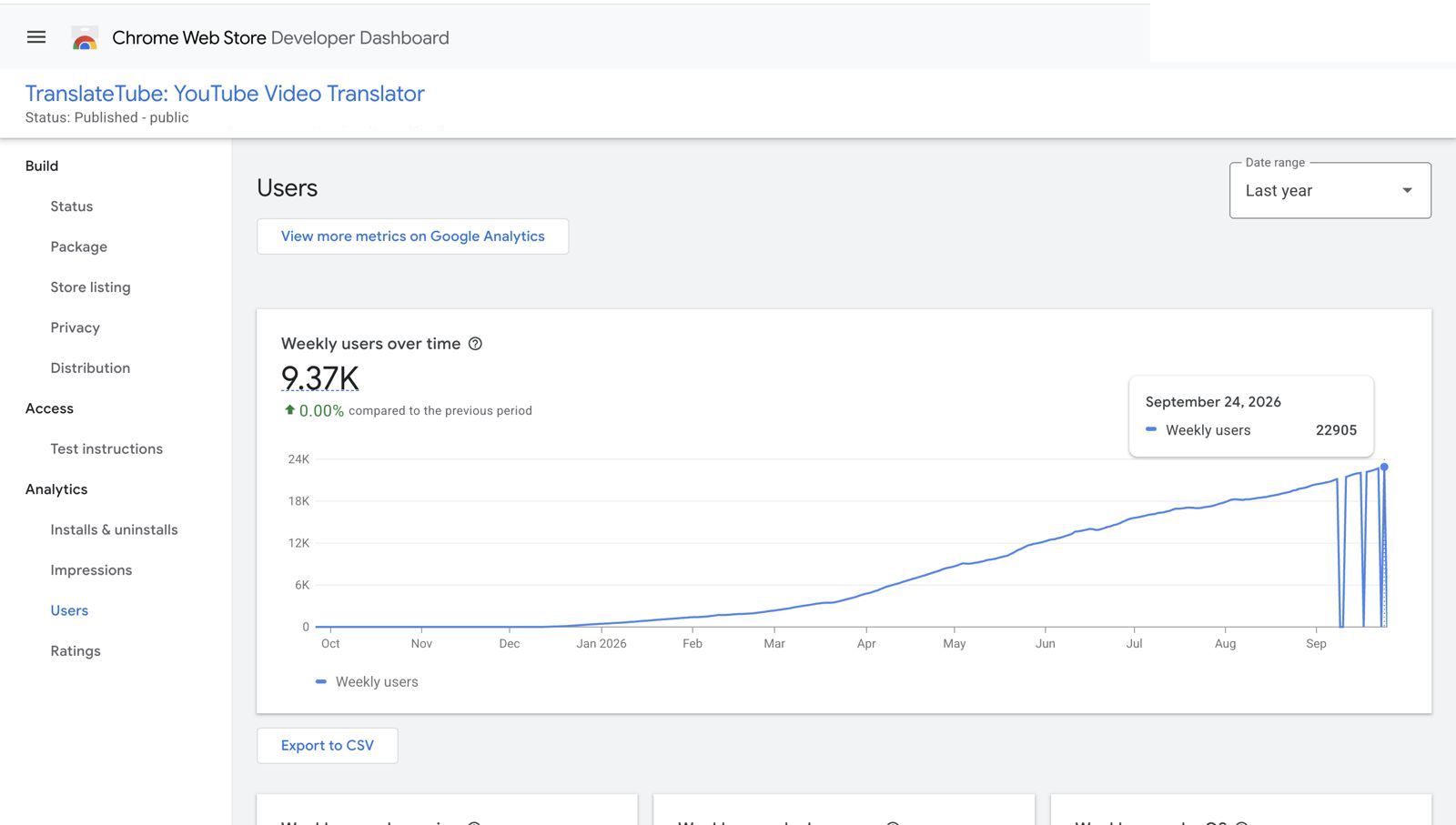 Chrome Web Store dashboard — users, last 12 months. No paid installs.
1. The problem: which words do people actually type?
Before launch we had a product and a guess: people would search "video translator". A guess is what most founders start with — and it is how most listings get written. The question we asked instead was the one everyone types into Google: what keywords are our competitors using, and how much traffic is behind them?
2. What we did
- Found the real competitors — not the two brands we knew, but the ten apps that show up when a user searches for what we do.
- Pulled the keywords they rank for, in the store and in Google, with monthly searches and real clicks — the second number matters: two word orders can show the same volume while one gets 665 clicks and the other 16.
- Checked competition, not just demand. For each candidate we looked at who sits in Google's top 10 and how strong the apps ranking for it in the store are. A big number can be a trap: it is often someone's brand name, or a query where the top is held by apps with 500,000 ratings.
- Found the low-competition keyword. Queries with "YouTube" in them — translate YouTube video, YouTube video translator — had real demand and a weak top: small sites, forums, apps with a few hundred ratings. "Dubbing", by contrast, looked bigger but belonged to brands and a top-10 no new app could enter.
- Put the keyword where it counts: the app title, the subtitle, the first lines of the description, and the pages of the website.
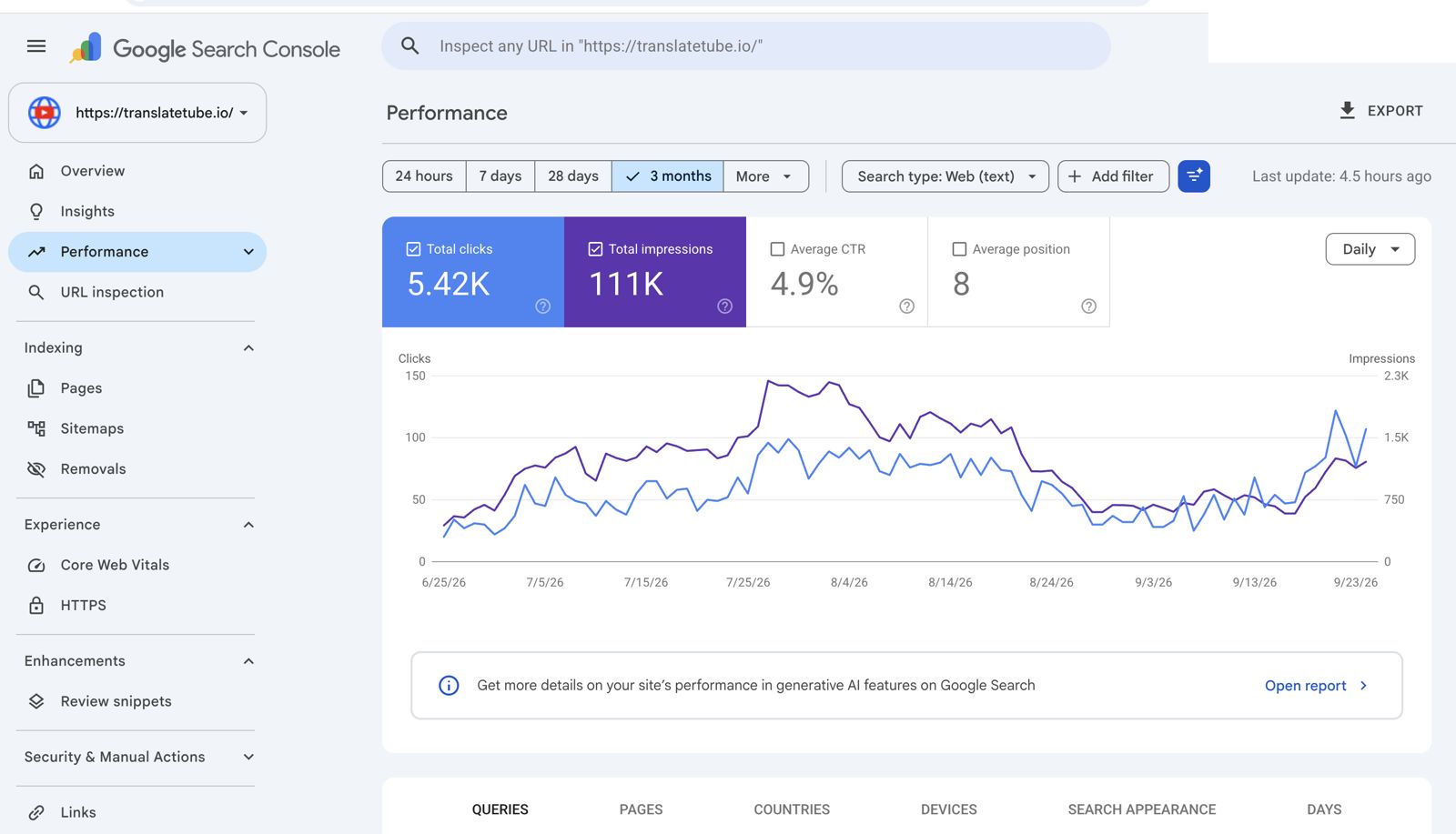 Google Search Console — the website, last 3 months: 5.42K clicks, 111K impressions, CTR 4.9%, average position 8.
3. What happened
Users came from search alone: 22,900 by September, nine months after launch. Search Console shows ≈ 1,800 Google clicks a month to the site — and the top queries were the ones the method had found, with "YouTube" in them. The countries surprised us: the biggest were not the US but markets nobody had guessed — which is why the report now shows demand per country instead of assuming.
4. What we would do differently
Start earlier. The name was changed after launch, and every month with the wrong title is a month of lost installs. And check your own phrases before building around them: the phrase we believed in most had a fraction of the demand of the one we ended up with.
5. This is what the report does for you
Riwords is this method turned into a one-time report: your real competitors and the keywords they rank for, what people actually type with volume, real clicks and difficulty per country, a check of your own phrases, what competitor users praise and complain about, and the title and keywords for your listing or site. The full sample report on this site is the real TranslateTube report.
Check your competitors' keywords — free[email protected] · Privacy · Terms · Refunds